“HDC Hyundai Development Company minimizes on-site process interference and increases work efficiency through Meissa.”
Construction sites are highly complex and multi-layered. As construction progresses, the number of subcontractors increases, and multiple processes are carried out simultaneously across different zones.
To successfully manage a project in an environment where all elements are closely interconnected, it is essential to oversee each construction phase as well as the movement of materials and equipment from an overall perspective.
To systematically manage this complexity, HDC Hyundai Development Company introduced Meissa. Rapid data sharing enables immediate communication, while on-site visualization provides a strong foundation for minimizing process interference and improving overall work efficiency.
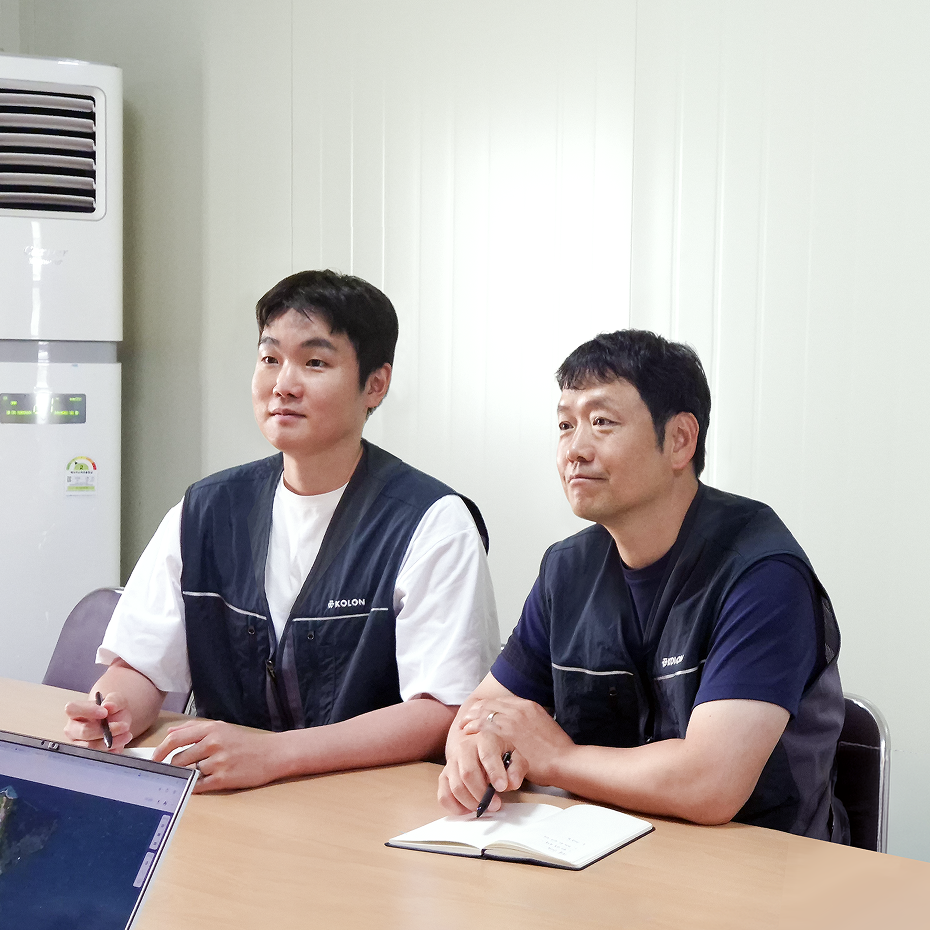
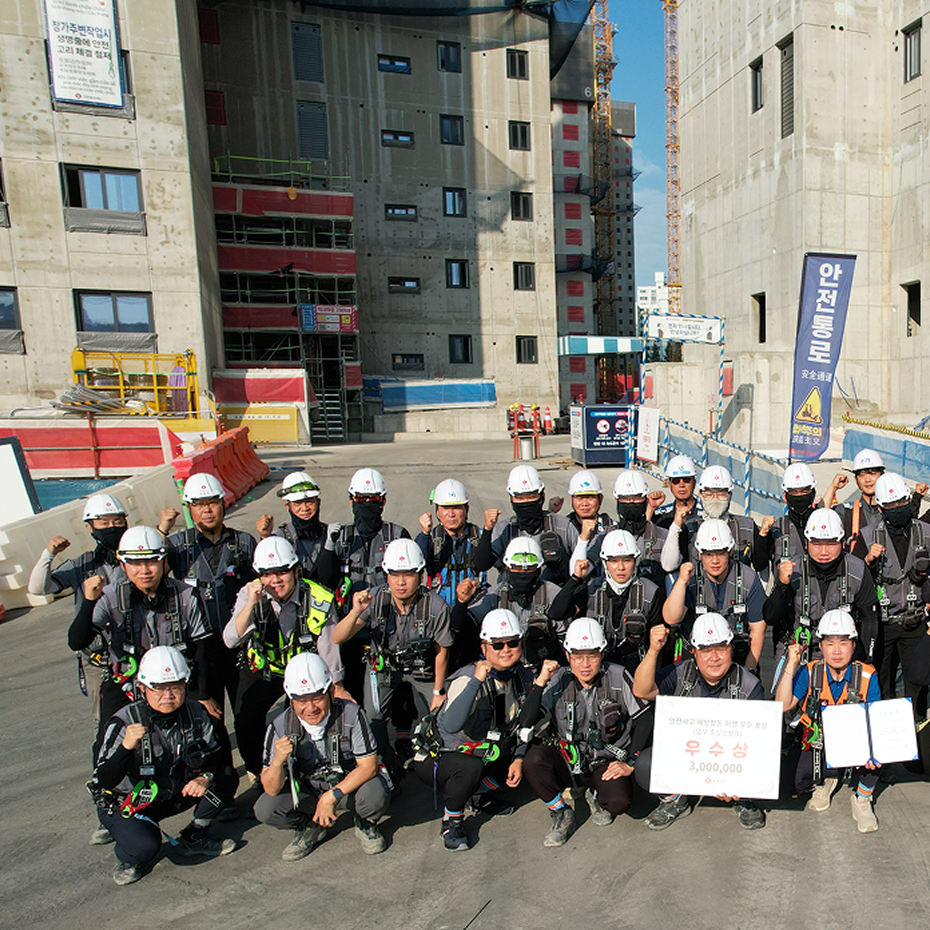
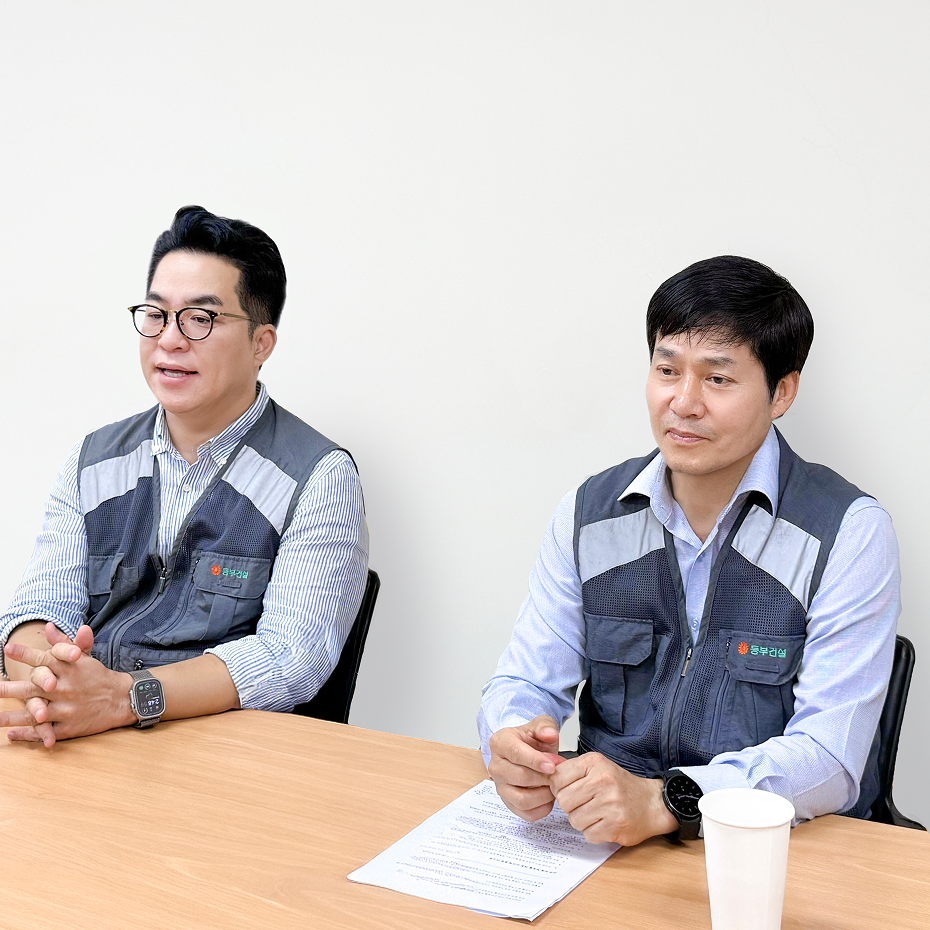
In an on-site interview at HDC Hyundai Development Company’s Incheon City OCL construction site, the team shared how Meissa has helped improve operational efficiency.
Construction Operation Within Boundaries and Without Gaps
Q. Please give us a brief introduction to the field.
This is the Incheon City OCL Complex 3 construction site. The project consists of eight buildings with a total of 1,879 households, including officetels. It is a large-scale residential and commercial complex featuring six movie theaters and 338 commercial facilities.
The project is currently nearing completion. Meissa was introduced in 2021 as part of HDC Hyundai Development Company’s smart construction initiatives and has been actively used since the early stages of construction, for approximately three years.
Q. How is Meissa used in the field?
Meissa is used primarily for construction planning and site management.
Apartment construction sites are usually located in residential areas and have clearly defined boundaries, requiring strict control of access and efficient use of limited space. All materials, equipment, and personnel must be operated effectively within these boundaries, which makes accurate planning and on-site management essential.
By using Meissa, we can clearly understand current site conditions, identify adjacent structures, and establish efficient work and movement routes. Viewing the site from above through drone data allows us to manage complex operations as if looking at a chessboard, significantly improving planning accuracy and efficiency.

Before Meissa, construction plans were largely based on drawings. However, drawings do not fully reflect real-time site conditions. By conducting weekly drone flights and planning based on the latest site data, the accuracy, completeness, and overall understanding of construction plans have greatly improved.
The same applies to on-site management. Previously, communication based on drawings often led to misunderstandings, as many workers found it difficult to interpret floor plans. Now, during meetings with partner companies, Meissa is used as a shared visual reference. By pinpointing exact locations on the platform, everyone involved can immediately understand the context, making instructions and decision-making far more intuitive.
Standards for Clear Settlement Management
Q. Is there anything that became easier by using Meissa?
Apartment construction projects typically involve a large number of partner companies across civil works, structural work, electrical systems, finishing, and landscaping. Settlement is usually conducted on a monthly basis, but evaluation standards differ by trade, making it difficult to objectively assess work volumes, especially for earthworks and concrete pouring.
Previously, settlement was often based on indirect indicators such as the number of dump trucks or ready-mixed concrete deliveries, which made it difficult to track work accurately. After introducing Meissa, work volumes can be understood more objectively through quantity calculations.

In particular, Meissa has been widely used by the public works team when preparing concrete pouring plans. While main residential buildings usually have consistent floor areas, auxiliary buildings vary significantly by zone, making volume calculation complex. Using Meissa’s area measurement tools, these quantities can be calculated accurately, enabling more systematic settlement management.
By knowing quantities in advance, backward calculations and pouring plans can be established more easily. This allows accurate estimation of required ready-mixed concrete, providing a clear basis for monthly settlement and work evaluation.
From Intuition to Data
Q. I understand that weekly drone filming has been conducted since the start of construction. Is there a reason for this?
The primary reason is to preserve accurate site records. By using Meissa, construction history is automatically accumulated in a time series without requiring manual documentation of every detail.
As construction methods and technical know-how are recorded as objective data, they can be referenced at any time. Since apartment construction projects often share similar construction methods, past data can be effectively applied to future sites.
At other sites, understanding why certain construction decisions were made often required relying solely on photos. If Meissa had been used, surrounding terrain and layout could have been reviewed at a glance, allowing a clearer understanding of the decision-making context.
At the Incheon City OCL site, comprehensive field records have been accumulated. In the future, when similar construction decisions are required at other sites, past instructions and site conditions can be quickly reviewed through the platform. As a result, decision-making is shifting from reliance on individual experience to data-based judgment, and accumulated site data is becoming a valuable company asset.

HDC Hyundai Development Company and Meissa: Smart Construction of the Future Together
Q. What would you like to do more with Meissa in the future?
We would like to continue improving the platform by actively reflecting feedback from the field, as we have done so far.
Features such as the ability to instantly annotate orthophotos during meetings, improved site navigation when zooming in and out, and easier identification of specific areas would further enhance usability.
From our perspective, the reason Meissa has been used consistently over a long period is its responsiveness to on-site needs. We hope to continue contributing field insights so that Meissa can evolve into a platform that delivers even greater value across a wider range of construction projects.